Why Almost Nobody in Your Book Club Actually Finishes the Book — and How to Fix It
Quick Answer: Most book clubs struggle with unfinished books because the book selection process and the discussion format both assume unlimited free time that most members don’t actually have. Shorter monthly page targets, a shared ‘permission to skip ahead in discussion’ rule, and picking books democratically fixes most of the pattern.
Every meeting starts with the same slightly awkward moment: half the group admits they didn’t finish, or didn’t start. This isn’t a commitment problem with your specific group — it’s close to universal, and it’s mostly a structural issue, not a discipline one.

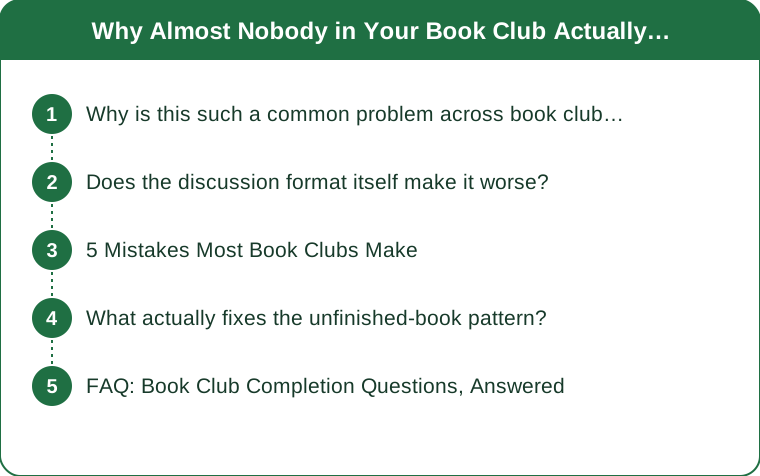
Why is this such a common problem across book clubs generally?
Two structural issues compound: book selection often happens through one enthusiastic member picking something ambitious (a 500-page literary novel) without checking whether the group’s actual reading pace and schedules support it, and meeting cadence (often monthly) doesn’t map to how most adults actually fit reading into busy weeks.
The combination means members start behind by design, not by lack of interest — a 450-page book in a busy month with one 3-week runway was never realistic for most schedules to begin with.
Does the discussion format itself make it worse?
Often, yes. Many book clubs implicitly assume everyone read the whole book, which creates pressure for those who didn’t to stay quiet or fake having finished, rather than engage meaningfully with the portion they did read.
Clubs that explicitly build in ‘no spoilers past page X’ discussion segments — discussing the first half thoroughly before opening up to full-book spoilers — let partial readers participate genuinely instead of silently checking out.

5 Mistakes Most Book Clubs Make
1. Picking books democratically without checking length against the meeting timeline — a 600-page book needs more than 4 weeks for most groups.
2. No permission structure for partial reading. Members feel they must finish or stay silent, rather than being invited to discuss what they did read.
3. No accountability check-in mid-month. A single reminder message at the halfway point measurably increases completion rates.
4. Ignoring reading pace diversity. A group with wildly different reading speeds needs either shorter books or a longer runway, not one-size-fits-all deadlines.
5. Treating ‘didn’t finish’ as a personal failure rather than useful data about book length or timeline mismatch for the group.
What actually fixes the unfinished-book pattern?
Match book length to your actual meeting cadence: a monthly club realistically supports 250-350 pages for most working adults, not 500+, unless the runway is extended to 6+ weeks for longer picks.
Build in an explicit ‘read what you can’ permission at the start of discussion, and consider a mid-month check-in message — even an informal ‘how’s everyone doing on pages?’ text meaningfully improves completion by creating light, friendly accountability.
FAQ: Book Club Completion Questions, Answered
Should book clubs enforce finishing the book as a rule?
Most successful long-running clubs found the opposite works better — removing pressure and allowing partial engagement keeps members coming back more reliably than enforcement.
How long should a book club give for a 400+ page book?
Many clubs find 6-8 weeks works better than a strict monthly cadence for longer books, rather than forcing the same timeline regardless of length.
Does audiobook counting as ‘reading’ help completion rates?
Yes for many groups — explicitly welcoming audiobooks as equally valid removes a barrier for members with less reading time but a commute or chores where they can listen instead.
TL;DR:
- Unfinished books are usually a structural mismatch (book length vs. timeline), not a discipline problem
- Match book length to your real meeting cadence — 250-350 pages for a monthly club is realistic
- Explicitly welcome partial reading in discussion instead of assuming everyone finished
- A friendly mid-month check-in message measurably improves completion rates
Before your next pick, check the page count against your actual meeting timeline — that single check prevents most of the pattern before it starts.
Keep Reading
This article is for general informational and styling purposes only. Fit, sizing, and product availability may vary.