Starting a Book Club That Actually Survives: The Founder's Guide
Most book clubs die at meeting three — not from bad books, but from undecided logistics: fuzzy schedules, guilt-based attendance and one over-caffeinated discussion dominator. The founder’s guide to a club that’s still meeting next year.

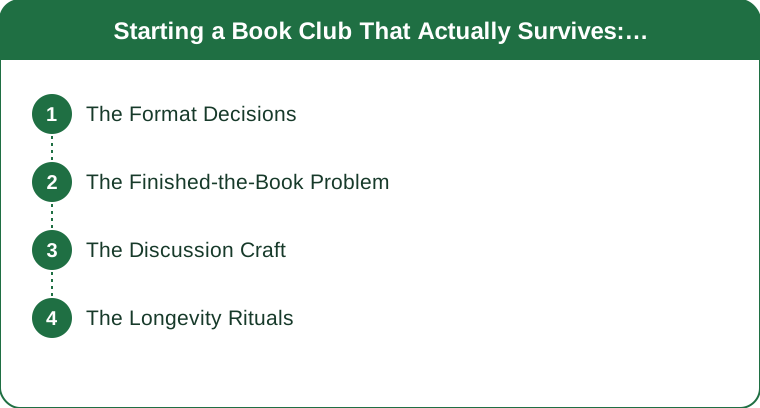
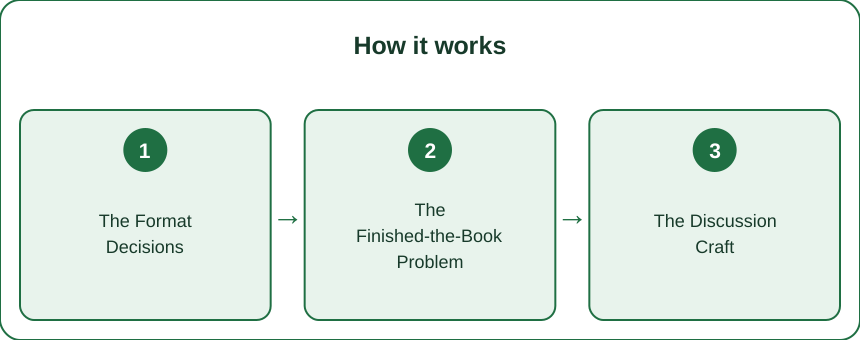
The Format Decisions
The choices that decide longevity: the schedule ruthlessness (same day, same week monthly — ‘first Thursday’ survives; ‘whenever works for everyone’ is a burial plot), the size sweet spot (5-8 regulars — enough for discussion when two cancel, small enough that everyone talks), the book-selection system (rotating picks beat voting — ownership keeps members; the picker also leads that meeting), and the venue honesty (rotating homes builds intimacy, the café-or-library neutral venue lowers hosting burnout — pick the one your group’s energy affords).
The Finished-the-Book Problem
The attendance-guilt fix: the come-anyway rule (members who didn’t finish still attend — the club is the point; the book is the excuse; guilt-based no-shows kill clubs faster than any bad novel), the spoiler policy (declared upfront: full-spoilers discussion, always — the didn’t-finishers accept the risk), the length mercy (alternating chunky picks with slim ones — the 700-page pick needs a two-month runway or a smaller sibling), and the DNF amnesty (hating the book is excellent discussion material — ‘why did this not work’ fills an evening better than polite praise).

The Discussion Craft
Making the talk actually good: the three-question minimum (the picker brings three real questions beyond ‘did you like it’ — the printed-guide questions work; the personal ones work better), the dominator diplomacy (the round-robin opener — everyone gives a one-minute first take before open discussion — structurally shares the floor), the tangent budget (life-chat is half the club’s value — the trick is the second half; ‘okay, back to the book’ is the host’s one required sentence), and the wine-and-snacks note (refreshments are load-bearing club infrastructure — assign them like the reading).
The Longevity Rituals
The keep-it-alive layer: the yearly anchor events (the December favorites-recap, the summer author-event outing or film-adaptation night — ceremony binds clubs like it binds walking groups), the new-member policy decided early (open-door dilutes intimacy, closed-door risks attrition — the invite-by-consensus middle), the pause-not-death protocol (busy seasons get official month-offs, not slow fades — a club that skips deliberately returns; one that fizzles doesn’t), and the founder’s secret (the club runs on ONE person protecting the calendar for the first year — after that, the ritual protects itself). Books optional; belonging is the actual genre.
Fixed schedule, come unfinished, three questions, assign the snacks. Book clubs die of logistics, not literature — decide the boring parts and the good parts run for years.
Keep Reading
This article is for general informational and styling purposes only. Fit, sizing, and product availability may vary.