The Permission-to-Quit Rule That Makes You Read More Books, Not Fewer
Quick Answer: Use the ‘page number = your age’ rule — read that many pages before deciding to quit, then quit guilt-free if it’s not working. This single permission tends to increase total books finished per year, not decrease it.
You’re 40 pages into a book you don’t like, but quitting feels like failing at reading. So you push through, it takes three weeks, and you don’t pick up another book for a month afterward. That guilt-driven persistence is exactly what’s shrinking your reading habit, not growing it.

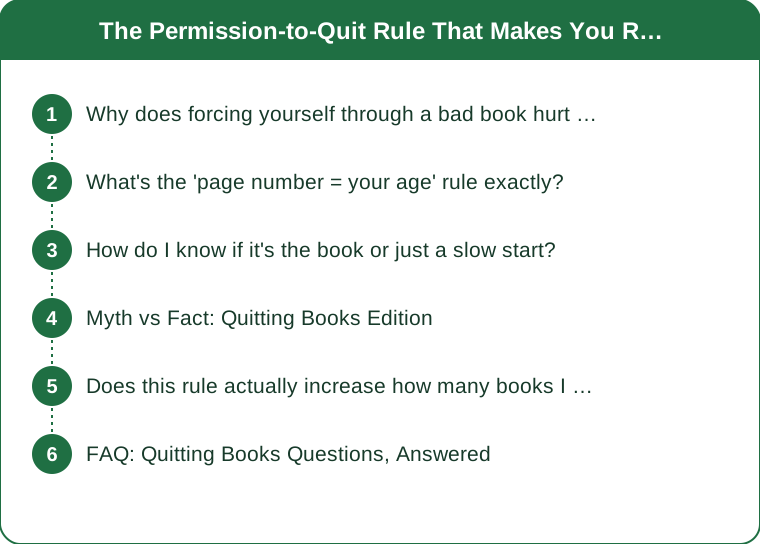
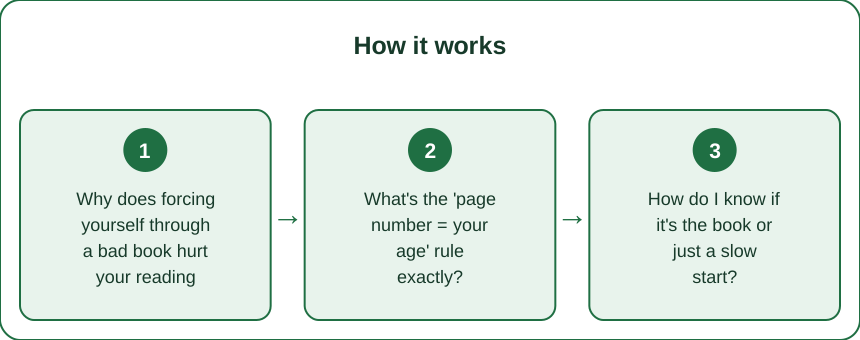
Why does forcing yourself through a bad book hurt your reading habit overall?
Because finishing a book you dislike, out of obligation, associates reading itself with drudgery rather than pleasure. That association carries into your next book choice — you approach reading time with less enthusiasm, read slower, and are more likely to skip it entirely for a few weeks after.
Quitting early, by contrast, protects your appetite for the next book, which is the actual goal if you want to read more overall.
What’s the ‘page number = your age’ rule exactly?
Read at least as many pages as your age before deciding whether to quit — a 34-year-old gives a book 34 pages, a 60-year-old gives it 60. This ensures you’ve given the book fair setup time without demanding you finish something that’s clearly not working after a fair trial.
Some readers modify it to a flat 50-page rule instead, which works similarly well — the exact number matters less than having one you commit to in advance.
How do I know if it’s the book or just a slow start?
Ask: am I curious what happens next, or am I reading out of duty? A slow-burn book you’re still curious about is different from one where you feel no pull to continue. The rule gives you a fair sample size to answer that honestly rather than quitting on page 5 out of impatience.

Myth vs Fact: Quitting Books Edition
Myth: Quitting a book is a personal failure. Fact: it’s a time-allocation decision, no different from switching a TV show you’re not enjoying.
Myth: You should always finish what you start, in reading as in everything. Fact: reading is discretionary leisure time — the stakes and reasoning are different from finishing a work project.
Myth: If a book is well-reviewed, you should push through even if you’re not enjoying it. Fact: reviews reflect other readers’ preferences, not a guarantee it’s right for you right now — the third mistake, mistaking critical consensus for a personal obligation.
Does this rule actually increase how many books I finish per year?
Anecdotally and per reading-habit research, yes — readers who give themselves explicit permission to quit report reading more books overall, because they’re not stalled for weeks on something they weren’t enjoying, and return to reading time more readily.
FAQ: Quitting Books Questions, Answered
Should I ever go back to a book I quit?
Sometimes — a book quit at the wrong life moment can click later. Keep a short ‘maybe later’ list rather than a hard rejection.
Does this rule apply to book club picks too?
It can, though social accountability is part of the point of book club — many readers finish club picks anyway for the discussion, even if they’d quit it solo.
What if I quit most books I start — is that a problem?
If you’re quitting nearly everything, it might be worth examining whether you’re choosing genres or styles that don’t actually match your taste, rather than a quitting-too-easily issue.
TL;DR:
- Forcing through disliked books hurts your overall reading habit, not just that one book
- Give a book pages equal to your age (or a flat 50) before deciding to quit
- Ask if you’re curious what happens next, or just reading out of duty
- Quitting guilt-free tends to increase total books read per year
Pick up that book you’ve been slogging through and check: are you past your fair-trial page count? If so, permission granted — put it down and start something you’re actually excited about.
Keep Reading
This article is for general informational and styling purposes only. Fit, sizing, and product availability may vary.