Why 'One Book a Month' Might Be the Wrong Goal for Your Reading Habit
One book a month sounds like a modest, achievable reading goal, but for a lot of people it quietly becomes another source of guilt rather than a source of joy — a slow month feels like failure, and a fast month feels like the goal was set too low anyway. Here is why fixed monthly quotas backfire for many readers, the alternative structures that actually sustain a habit, and how to figure out which approach fits your own reading life.

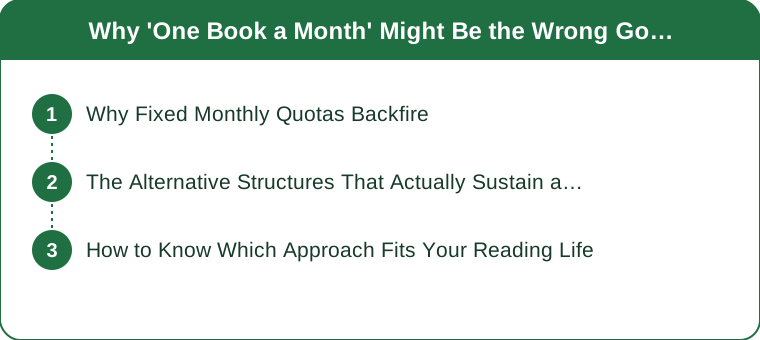
Why Fixed Monthly Quotas Backfire
The mismatch problem: the the-books-vary-wildly-in-length-and-density (the a fixed count treating a two-hundred-page novel and an eight-hundred-page dense nonfiction book as equivalent units — the count-based-goals-ignore-book-difficulty), the the-life-doesn’t-distribute-evenly-across-months (the busy months and slow months happening unpredictably, making a flat monthly target feel arbitrary rather than tailored — the a-flat-quota-fights-your-actual-schedule), the the-guilt-when-falling-short (the missing the monthly number triggering guilt that associates reading itself with failure rather than pleasure — the guilt-is-the-opposite-of-what-a-reading-habit-needs), the the-quitting-a-book-feels-like-losing-progress (the sunk-cost pressure to finish a book you’re not enjoying just to hit the count, from the how-to-quit-a-book-you-are-not-enjoying-guide logic — the quota-pressure-discourages-quitting-bad-fits), the the-speed-reading-to-hit-numbers (the rushing through books specifically to maintain the count, undermining the actual enjoyment and retention reading was supposed to provide — the the-goal-can-crowd-out-the-point-of-reading), and the reframe (the monthly-quota problem as measuring the wrong thing — books-per-month conflates volume with the actual goals most readers really have, which are enjoyment, consistency or specific learning)).

The Alternative Structures That Actually Sustain a Habit
What works better for different readers: the time-based-goals-instead-of-count-based (the setting a daily or weekly reading-time target — twenty minutes a day — rather than a book count, which flexes naturally with book difficulty — the time-scales-with-difficulty-count-doesn’t), the the-page-count-across-a-quarter (the tracking total pages read over a longer period like a quarter, smoothing out busy and slow months automatically — the a-longer-window-absorbs-natural-variation), the the-streak-based-daily-reading (the a simple habit streak for reading any amount daily, decoupled entirely from finishing speed from the build-a-reading-habit-guide logic — the consistency-not-completion-as-the-metric), the the-genre-or-theme-goals-instead-of-count (the setting a goal like exploring three new genres this year instead of a raw number — the qualitative-goals-fit-some-readers-better), the the-no-numeric-goal-at-all (the simply removing any tracked goal and reading purely by interest, which some readers find is what actually increases their reading — the sometimes-the-fix-is-no-metric), and the frame (the alternatives as time-based goals, quarterly page tracking, daily streaks, thematic goals, or no numeric goal at all — several structures that measure something more meaningful than raw book count).
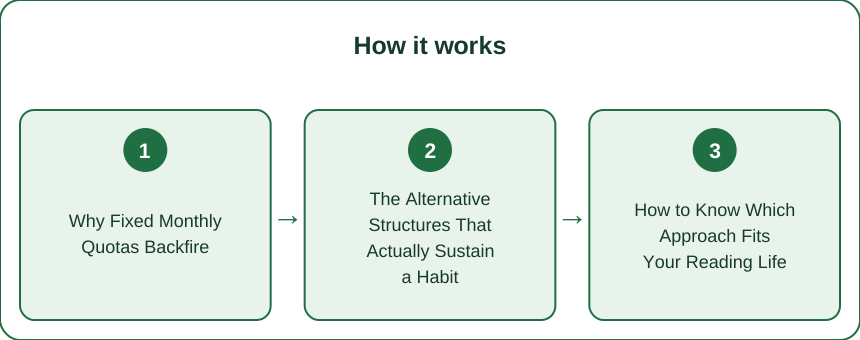
How to Know Which Approach Fits Your Reading Life
The practical self-assessment: the notice-when-guilt-shows-up (the paying attention to whether a current goal produces guilt more often than satisfaction, a clear signal it’s the wrong structure — the guilt-frequency-is-diagnostic), the the-consider-your-actual-schedule-variability (the a highly variable schedule suggesting a longer tracking window or time-based goal over a strict monthly count — the match-the-goal-window-to-your-actual-life-rhythm), the the-think-about-what-you-actually-want-from-reading (the clarifying whether the real goal is volume, exposure to new genres, consistency, or pure relaxation, since each points to a different structure — the the-real-goal-determines-the-right-metric), the the-try-a-different-structure-for-one-quarter (the experimentally switching goal types for a few months and noticing the difference in both output and enjoyment — the a-real-trial-beats-guessing), the the-permission-to-abandon-tracking-entirely (the recognizing that not every enjoyable habit needs a metric attached to remain worthwhile — the tracking-is-optional-not-mandatory), and the frame (the self-assessment as noticing guilt patterns, matching the goal window to your real schedule, clarifying your actual motivation, trialing an alternative for a season, and giving yourself permission to drop tracking altogether — the right structure is whichever one makes you want to pick up a book, not whichever one is easiest to state as a number).
A fixed one-book-a-month goal treats every book as an equivalent unit regardless of length or density, fights against naturally uneven months of busy and slow reading time, and often produces guilt that works against the actual point of building a reading habit. Alternative structures fit different readers better: time-based daily or weekly goals that flex with book difficulty, quarterly page tracking that smooths out variation, simple daily reading streaks decoupled from completion speed, thematic or genre-exploration goals, or no numeric goal at all. Figure out the right fit by noticing whether your current goal produces more guilt than satisfaction, matching the tracking window to how variable your actual schedule is, and getting honest about whether the real goal is volume, variety, consistency or simply relaxation — then trial a different structure for a season and see what actually makes you want to pick up a book.
Keep Reading
This article is for general informational and styling purposes only. Fit, sizing, and product availability may vary.